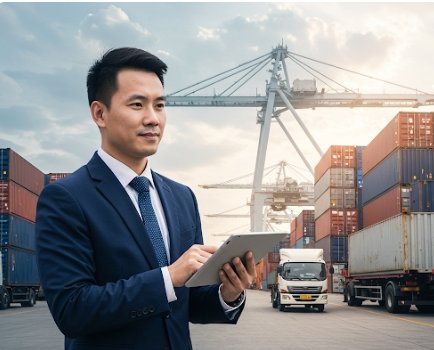
The cross-border logistics shipping process involves the entire chain of operations from seller to buyer, covering multiple steps such as order processing, transportation, customs clearance, and delivery. The specific process varies slightly depending on the logistics channel (such as postal parcels, commercial express, dedicated logistics, etc.), but the core steps are the same.
Below, Weefreight will provide a detailed analysis, which we hope will be helpful.
- Preliminary Preparation Phase
Order Confirmation and Stock Preparation
After receiving an order from a cross-border platform (such as Amazon, AliExpress, or an independent website), the seller confirms the buyer’s information (address, contact information, zip code), product information (quantity, specifications, whether it is a sensitive item), and logistics requirements (timeliness, whether it is insured, etc.).
Products are retrieved from the warehouse, quality inspected (to ensure they are free of damage and meet the standards of the destination country, such as EU CE certification and US FDA certification), and the order information is verified to be correct.
Packaging and Labeling
Select packaging materials (cardboard, bubble wrap, waterproof bags, etc.) based on the product’s characteristics to ensure shock and moisture resistance to prevent damage during transport (some countries have specific packaging material requirements, such as the EU’s ban on non-degradable plastics).
Print the shipping label (including shipping and receiving addresses, phone numbers, order number, tracking barcode, etc.) and affix it to a prominent location on the package. For shipments to the EU, the Middle East, or other regions, additional country of origin labels or language labels (e.g., French or Arabic) may be required.
For multiple items, verify the total weight and volume (to avoid exceeding the logistics channel’s weight/volume restrictions, such as the 2kg weight limit for postal parcels and dimensional weight for commercial express delivery).
Select a logistics channel and schedule a pickup.
Select a channel based on product attributes (weight, sensitive items), timeliness requirements, and budget:
Lightweight, small, and low-cost: Postal parcels (such as China Post Registered Mail and Netherlands Post);
Fast, high-value: Commercial express (DHL, FedEx, UPS);
Targeted markets: Dedicated logistics (such as dedicated lines to Europe and the US, or Southeast Asia).
Contact the logistics provider or schedule a pickup through the freight forwarding system, or deliver the package yourself to the logistics provider’s domestic collection warehouse.
II. Domestic Transportation and Collection Stage
Domestic Transportation
The package is transported from the seller’s warehouse or shipping point to the logistics provider’s domestic distribution center (such as major ports/airports like Shanghai, Guangzhou, and Shenzhen). This is typically accomplished by domestic express delivery (such as SF Express and YTO Express) or dedicated land transportation.
Goods Collection and Sorting
Logistics providers centrally sort packages from different sellers at a distribution center, categorizing them by destination, logistics channel, and package type (general goods/sensitive goods). These packages are then packaged into large units or organized into batches for export declaration.
III. Export Customs Clearance
Customs clearance is a core step in cross-border logistics, directly impacting shipping time. It is handled by logistics providers or their partner customs clearance agencies.
Declaration Preparation
Sellers must provide a commercial invoice (including product name, quantity, unit price, total price, and materials, all completed in English) and a packing list (including total number of pieces, total weight, and volume). Some products require additional certification (e.g., MSDS for batteries).
Logistics providers enter this information into the customs system and generate an export declaration.
Customs Inspection
Customs review the declared information and conduct spot checks to ensure that the package is consistent with the declaration (to check for false or missing information, and to check for prohibited or restricted items such as counterfeit brands or dangerous goods).
If the inspection passes, the package will be released for international transport. If it fails, additional documentation may be required, a fine may be imposed, or the package may be returned or destroyed.
IV. International Transport Stage
Select a transport method (air, sea, or land) based on the logistics channel, with air transport being the primary choice (fast and suitable for most cross-border goods):
Air transport: Packages are transported from domestic airports (such as Pudong and Baiyun Airports) to major airports in the destination country (such as Los Angeles, USA, Frankfurt, Germany), with a transit time of 3-7 days (commercial express) or 7-15 days (dedicated line/postal service).
Sea transport: Suitable for large shipments and goods with short transit times, with a transit time of 20-40 days and low costs. The package must first be transported by land to a port (such as Ningbo or Shenzhen Port), then shipped by sea to the port in the destination country.
Land transport: Primarily suitable for bordering countries, such as China-Vietnam, China-Mongolia, and the China-Europe Railway Express (to Europe), with a transit time of 10-30 days.
- Import Customs Clearance in the Destination Country
Upon arrival, the package must undergo import customs clearance at the local customs office (the process is similar to export customs clearance):
Declaration and Tax Payment
The logistics provider or local agent submits import declaration documents (commercial invoice, bill of lading, etc.) to the destination country’s customs office.
Customs calculates import duties based on the value of the merchandise and the tax rate (for example, the US is duty-free for goods under $800, and the EU is duty-free for goods under €22). If duties are required, the buyer or seller must pay them as required (some logistics channels offer “tax-inclusive” services).
Inspection and Release
Customs will randomly inspect the package for compliance (e.g., compliance with local safety standards and any infringements). If approved, the package will be released. If detained, the buyer may be required to provide proof (e.g., a personal use declaration). Otherwise, the package may be returned or destroyed.
VI. Domestic Transportation and Delivery in the Destination Country
Local Transshipment
After customs clearance, the package is taken over by the destination country’s logistics provider (such as USPS in the US, DHL in Germany, and Royal Mail in the UK) and transported to a local distribution center for sorting by region.
Final Delivery
The distribution center assigns the package to a delivery point, where the courier delivers it to the buyer’s door (for example, in Europe and the US, contactless delivery is often used, leaving the package at the buyer’s door); some countries require the buyer to pick up the package at a pickup point (such as parts of Southeast Asia).
After the buyer signs for the package, the logistics system updates the “Signed for” status, completing the entire process.
VII. Exception Handling (Optional)
Lost/Damaged Package: If the package is lost or damaged, the seller can file a claim with the logistics provider based on the tracking record (within the specified timeframe, e.g., DHL’s claim period is 30 days after shipment).
Returned Package: If the package is returned due to reasons such as buyer refusal or incorrect address, the package may be returned by the original route (at a high cost) or destroyed locally (subject to seller confirmation).
If you have any international logistics service needs, please click the floating chat icon in the lower right corner or other contact information in the lower right corner of the page to communicate with us immediately!