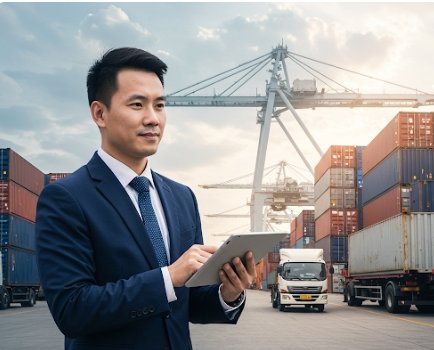
Cross-border logistics refers to the entire process from shipments originating in one country or region through a series of steps, including transportation, warehousing, customs clearance, and distribution, ultimately reaching the recipient in another country or region. It is the core link connecting both supply and demand in cross-border trade (especially cross-border e-commerce). Its core characteristic is its cross-border nature, requiring the handling of customs policies, tax regulations, transportation standards, and cultural differences in different countries. The process complexity is far greater than that of domestic logistics.
- Core Models of Cross-Border Logistics
Depending on factors such as cargo weight, timeliness requirements, cost budget, and target market, cross-border logistics has developed into a variety of mainstream models. Newcomers can choose the right one based on their specific needs:
- International Express Delivery
International express delivery is a standardized, door-to-door service provided by renowned international logistics companies (such as DHL, FedEx, UPS, and TNT). Its core advantages are fast delivery times, strong reliability, and full traceability, making it suitable for high-value, urgent shipments (such as consumer electronics products and samples).
Delivery Time: 3-7 business days to major cities worldwide
Disadvantages: Expensive, with strict weight and volume restrictions (typically, a single piece cannot exceed 70kg).
Suitable Scenarios: Cross-border B2B sample shipments, high-value B2C orders, and urgent replacement parts.
- International Air Freight + Last-Mile Delivery Model
This model consists of two parts: “First-Mile Air Freight + Last-Mile Delivery.” First-Mile Air Freight involves an airline transporting the goods from a domestic airport to the destination country’s airport (e.g., China to Los Angeles International Airport). Last-Mile Customs Clearance and final delivery are handled by a local logistics provider (e.g., USPS in the US, Royal Mail in the UK).
Timeframe: 7-15 business days
Advantages: More cost-effective than international express delivery, suitable for shipments with medium timeframe requirements
Suitable for: Cross-border e-commerce medium-sized shipments (weighing 1-30kg), non-urgent bulk orders
- International Ocean Freight + Last-Mile Delivery Model
The first leg of the shipment is shipped by container shipping to the destination port (e.g., China to Hamburg, Germany), and the last leg is delivered by land or air freight. This is the most cost-effective but slowest mainstream delivery model.
Timeframe: 15-25 days for routes to the US West Coast, 25-40 days for routes to Europe, and 35-60 days for routes to South America
Sub-categories:
Full Container Load (FCL): Sufficient cargo volume to fill an entire container (e.g., 20-foot container, 40-foot container);
Less than Container Load (LCL): Smaller cargo volume shipped together with other goods, suitable for small and medium-sized sellers.
Applicable Scenarios: Large and heavy cargo (furniture, appliances), low-cost bulk shipments, and overseas warehouse replenishment.
- Cross-border Dedicated Logistics Model
Dedicated logistics is an intensive logistics solution targeted at specific countries/regions. It integrates first-leg transportation (air/sea/rail), customs clearance resources, and final-leg delivery to create a one-stop service. Its cost-effectiveness lies somewhere between international express and ocean freight.
Typical Examples: US, Europe, Southeast Asia, and the Middle East
Delivery Time: 10-20 business days
Advantages: Highly targeted (e.g., adapting to local customs clearance regulations), transparent pricing, and accepting some sensitive goods (e.g., weakly magnetic and electrically charged goods)
Applicable Scenarios: Mainstream cross-border e-commerce B2C shipments (e.g., Amazon and independent website orders), small and medium-sized shipments
- Overseas Warehouse Model
Overseas warehouses involve companies leasing or building their own warehouses in the target country. First, goods are shipped to the warehouse in bulk for stocking via first-leg logistics. Once an order is received, goods are shipped directly from the local warehouse for final delivery. Their core advantages are shortened final-leg delivery times and improved user experience.
Subcategories:
Third-party overseas warehouses: Operated by professional logistics service providers, these warehouses are asset-light for small and medium-sized sellers.
Self-operated overseas warehouses: Large companies (e.g., Amazon FBA and SHEIN) build their own warehouses, offering greater control.
Delivery Time: Local delivery within 1-3 business days (similar to local e-commerce delivery times)
Suitable Scenarios: Stocking up on popular products, delivering large shipments, and handling returns requiring a quick response
- Dedicated Small Parcel Service
Dedicated small parcel service is an economical logistics solution for “light and small items” (typically weighing ≤2kg). It reduces costs through centralized sorting and batch customs clearance, making it a popular choice for cross-border e-commerce delivery of light and small items.
Timeframe: 15-30 business days
Advantages: Extremely low prices, registered and traceable mail, low barrier to entry (no need for bulk stocking)
Applicable scenarios: Cross-border e-commerce small and lightweight items (such as accessories, phone cases, and stationery), low-value B2C orders
II. Analysis of the Core Processes of the Cross-Border Logistics Chain
Regardless of the model chosen, the core process of cross-border logistics can be broken down into four key steps: “Domestic First Leg → Cross-Border Transportation → Customs Clearance in the Destination Country → Final Delivery.” Each step has clear operational priorities:
Step 1: Domestic First Leg – Cargo Collection and Pre-Processing
The domestic first leg is the transfer of goods from the seller to the cross-border logistics service provider’s warehouse. The port of entry process is fundamental to ensuring a smooth subsequent process. Key operations include:
Goods packaging: It must meet cross-border transport standards (e.g., shockproof and waterproof) and be labeled with necessary information (e.g., shipping marks and fragile labels) to prevent damage during transport.
Document preparation: Based on the type of goods and the requirements of the destination country, basic documents such as a commercial invoice (specifying the name, quantity, and value of the goods), a packing list, and the HS code must be prepared.
Goods delivery: The seller delivers the goods to the designated warehouse, either by self-delivery or through a logistics provider. The warehouse then completes pre-processing, including weighing, sorting, and labeling (e.g., a tracking code).
Step 2: Cross-border Transportation – The Transfer of Goods Across National Borders
Cross-border transportation is the core process for transporting goods from domestic ports to ports in the destination country. Transportation methods vary significantly across different logistics models:
Express/dedicated lines: Typically, air freight is the primary method. Logistics providers integrate flight resources and deliver goods in bulk to the destination country’s airport.
Ocean freight: Goods are gathered at the port, loaded into containers, and then shipped to the destination country’s port by ship (FCLs are directly loaded into containers, while LCLs require first-collection and then consolidation).
Overseas warehouse replenishment: Air freight (for urgent replenishment) or ocean freight (for routine bulk replenishment) can be chosen based on cost and timeliness.
The key to this process is timeliness. Flight/shipping schedules must be confirmed in advance to avoid delays that could impact subsequent processes.
Step 3: Customs Clearance in the Destination Country – A Core Compliance Checkpoint
Customs clearance is a mandatory checkpoint for goods entering the destination country, directly determining whether they can enter the country smoothly. The core operation is completed by logistics providers or customs brokers, and sellers are required to provide key information:
Declaration: The customs broker submits cargo information (such as product name, value, and HS code) and related documents to the local customs office. Customs then verifies the authenticity and compliance of the declared information.
Inspection: Customs conducts random inspections of goods. If the declared information matches the actual goods, they are promptly released. Failure to do so (such as understating the value or mismatching the product name) may result in goods being detained, fined, or returned.
Tax Payment: Based on the tariff policies of the destination country, the consignee or seller (e.g., in a double-clearance and tax-inclusive model) pays import duties, value-added tax, and other taxes. Customs releases the goods after payment.
Note: Sensitive goods (such as those with electrical components or liquids) require additional documentation (such as a UN38.3 report for batteries) for customs clearance; otherwise, they are likely to be detained.
Stage 4: Last-mile Delivery – Goods Delivered to the Recipient
Last-mile delivery is the final stage of shipping goods from the destination country’s port/overseas warehouse to the recipient, directly impacting the user experience. The main processes include:
Cargo Transshipment: After customs clearance, goods are transferred from the port to a local distribution center (express/dedicated delivery) or shipped directly from the overseas warehouse;
Local Delivery: Local logistics providers (such as USPS in the US, Yodel in the UK, and Jitu in Southeast Asia) complete the “last mile” delivery, offering door-to-door delivery or pickup at a designated pickup point;
Signature Confirmation: After the recipient signs for the goods, the logistics system updates the “delivery completed” status, completing the entire logistics process.
- Pitfalls for Beginners: Key Considerations for Cross-Border Logistics
Mode Matching: Avoid a “one-size-fits-all” logistics model – choose dedicated parcel lines for small and light items, international express for high-value, urgent shipments, ocean freight for large and bulk shipments, and overseas warehouses for popular products.
Compliance Declaration: Strictly declare the value and product name according to the actual conditions of the goods to avoid detaining goods due to under-declaration and tax evasion. Accurately enter the HS code (which can be checked on the official website of the destination country’s customs).
Time Limitation: During peak seasons (such as Black Friday and Christmas) or special periods (such as port congestion and geopolitical conflicts), prepare and ship goods 1-2 weeks in advance to allow for a sufficient time buffer.
Service Provider Selection: Prioritize qualified and reputable logistics providers. Avoid choosing unqualified freight forwarders, tempted by low prices, which can lead to lost goods and unreliable after-sales service.
In short, the essence of cross-border logistics is “cross-border resource integration and compliant delivery.” Newcomers must first understand the characteristics and needs of their goods, then match them to a corresponding logistics model. Furthermore, they must be familiar with the key nodes throughout the entire process chain to effectively mitigate risks and ensure smooth delivery.
If you have any international logistics service needs, please contact us by clicking the floating chat icon in the lower right corner or using the other contact information in the lower right corner of the page!