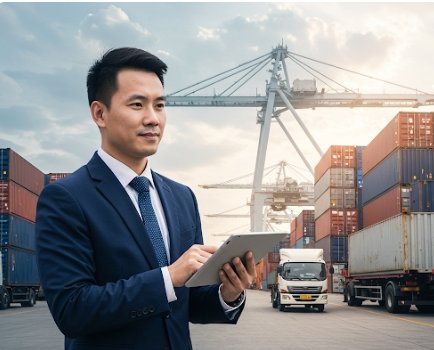
Direct shipping, main line transshipment, and feeder vessels (branch line connection/barge) are the three most common voyage organization modes in international shipping. These three modes differ significantly in terms of transit time length and stability, number of loading and unloading operations, probability of cargo damage, certainty of space availability, and connection at the destination port. This not only affects the number of days of the voyage but also directly determines logistics risks and overall costs.
Next, Weefreight will provide you with detailed answers, hoping to be helpful to you.
I. Basic Definitions of the Three Modes
Direct Shipping: The vessel loads cargo at the port of origin and sails directly to the destination port without stopping at intermediate ports, changing vessels, or unloading cargo. The route is fixed and the voyage is the shortest, such as Shanghai to Los Angeles direct shipping, Ningbo to Rotterdam direct shipping.
Transshipment: Cargo is first transported to a regional hub port (such as Singapore, Busan, Cologne, Algeciras), where containers are unloaded and transferred to another main line vessel, and then transported to the final destination port. The entire process involves 1-2 vessel changes.
Feeder Vessel (Branch Line Barge): Inland ports/small ports cannot accommodate large vessels. Containers are first transported to the main line port by small barges/feeder vessels, and then loaded onto large ocean-going vessels; some destination ports also require barges to connect to inland rivers/small ports after the large vessel docks at the main port. This belongs to branch line transshipment rather than ocean-going transshipment.
II. Comparison of Transit Time Impact
Direct Shipping
The shortest voyage, no extra waiting time. Mainstream direct shipping voyages to the US are mostly 12-22 days, and to Europe 25-35 days.
The most stable transit time, unaffected by congestion at transshipment ports or delays in vessel changes. The estimated time of arrival (ETA) is the most accurate, with fluctuations of only 2-4 days during peak seasons. No transshipment queues, no congestion at hub ports; overall transit time is controllable, suitable for orders with strict delivery time requirements and short replenishment cycles.
Transshipment
Involves one extra unloading, loading, and waiting time at the port, resulting in an overall transit time 7–14 days slower than direct shipping, and potentially more than 15 days slower at some congested hub ports.
Highly susceptible to the operational efficiency of the transshipment port, vessel capacity allocation, and weather conditions; ETA is frequently delayed, and fluctuations can reach 10–20 days during peak seasons due to port congestion.
There is a risk of demurrage and storage charges at the transshipment port; if the container cannot be loaded onto the second leg vessel, it will be stored for a long time, further extending the transit time.
Feeder Vessel
Only adds the short-distance transportation time of the feeder vessel, usually 2–5 days slower, which is significantly less than the delays caused by ocean transshipment.
Risks lie in the water level, tides, and operational efficiency of the feeder port; during peak seasons, there is a high risk of barge shortages at inland/small ports, leading to delays.
Suitable for shipments from/to inland ports, saving the cost and time of inland trucking to the main port; overall cost-effectiveness is higher than trucking to a direct shipping port.
III. Comparison of Cargo Damage and Ownership Risks
Direct Shipping
The entire process involves only two loading and unloading operations: loading at the port of origin and unloading at the port of destination, resulting in the lowest probability of container shaking, crushing, and dropping.
Seals remain intact throughout the entire journey, with no risk of lost, mixed, or misdirected containers; the preferred option for high-value, fragile, and precision equipment.
No container transshipment or rough handling at the terminal; the rate of moisture damage, water ingress, and breakage is the lowest among the three modes. Transshipment
At least one extra complete loading and unloading process is involved, with some double transshipment routes involving 3-4 loading and unloading cycles, significantly increasing the probability of container wear and tear, cargo crushing, and damage.
Transshipment ports have complex container yards, making misloading, lost containers, broken seals, and resealing after inspection more likely, making traceability difficult.
Long-term storage increases the risk of moisture damage and rain exposure, with light, bulky goods, cardboard boxes, and fragile items having the highest risk of damage.
Feeder Vessels
The number of loading and unloading cycles is slightly more than direct shipping but less than long-distance transshipment, resulting in a cargo damage probability between direct shipping and transshipment.
Feeder vessels have smaller tonnage and experience greater turbulence in rough seas, making them slightly more susceptible to moisture and water ingress in near-shore areas than large ocean-going vessels; however, the operational intensity is lower than transshipment.
The branch line transportation distance is short, and the overall risk is controllable. As long as the container loading and securing are standardized, the cargo damage is close to that of direct shipping.
IV. Other Key Hidden Differences
Space and Rolled Cargo: Direct shipping has higher priority for space and a lower probability of cargo being rolled over; transshipment requires matching with the second leg vessel, making it more susceptible to cargo being rolled over or skipped.
Cost Structure: Direct shipping has the highest unit price, but there are no transshipment handling fees or document exchange fees; transshipment has a lower unit price, but may incur transshipment handling fees and demurrage charges; feeder vessels include branch line freight charges, which can save on inland trucking fees.
Applicable Ports: Direct shipping only covers major ports; transshipment covers smaller ports and inland points; feeder vessels are suitable for inland river ports and smaller branch line ports.
(Note: The above information regarding timeliness or costs is for reference only. Please refer to the actual situation at the time of shipment for specific details. Thank you!)
If you have any international logistics service needs, please click on the floating chat icon in the lower right corner or other contact methods on the right side of the page to contact us immediately!