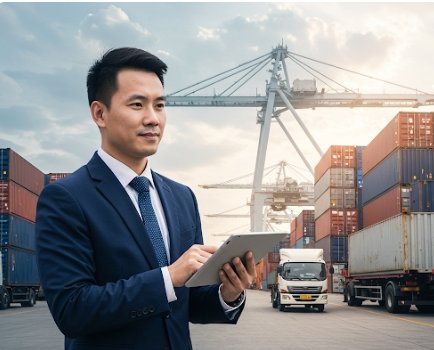
Overseas warehouse shipping and direct shipping are the two core logistics models in cross-border e-commerce. The core difference between them is not simply “different shipping locations,” but rather a comprehensive difference across all dimensions, from logistics chain, cost structure, delivery time experience to operational logic. Essentially, it’s the opposition between the “pre-stocking and local delivery” model and the “order-triggered cross-border direct shipping” model. The core differences are concentrated in five key areas: logistics chain, delivery time experience, cost structure, operational requirements, and risk dimensions, and they are suitable for completely different store operation scenarios.
Next, Weefreight will provide a detailed analysis, hoping to be helpful to you.
I. Core Logistics Chain: Local Warehouse → Buyer (Single-segment local delivery) vs. Domestic → Overseas Buyer (Full-chain cross-border transportation)
This is the most fundamental difference between the two. The complexity of the chain directly determines the subsequent delivery time, cost, and controllability:
Overseas Warehouse Shipping
The chain is extremely simple, purely local delivery: The seller sends the goods to the overseas warehouse in advance through bulk logistics such as sea freight/air freight/trucking. After the buyer places an order, the overseas warehouse directly sorts and packs the goods and delivers them to the buyer through a local logistics provider. The entire process is a single-segment chain of “overseas warehouse – local delivery,” without cross-border links or customs clearance, completely equivalent to the shipping model of local e-commerce.
Core features: One-time cross-border shipment, multiple deliveries. The cross-border logistics chain for stocking only needs to be completed once, and all subsequent orders are shipped locally, maximizing controllability.
Direct Shipping
The chain is complex, full-chain cross-border: Without pre-stocking, after the buyer places an order, the goods are shipped directly from the domestic warehouse, requiring the completion of the full-chain cross-border transportation of “domestic first-mile – international trunk line – overseas customs clearance – overseas last-mile delivery.” Each order must independently complete the entire cross-border process and undergo double customs compliance review in both the exporting and importing countries. Core Characteristics: Each order involves a separate cross-border transaction, and every order must go through the entire cross-border logistics chain. Problems in any link (such as customs clearance or international transportation) will lead to delays for that specific order.
II. Delivery Time and Buyer Experience: Local Express Delivery (1-3 days) vs. Cross-border Long Delivery Time (7-30 days)
Delivery time is the most intuitive difference between the two, directly determining the shopping experience of overseas buyers and serving as a core basis for platform traffic allocation:
Overseas Warehouse Shipping
Extremely fast delivery, excellent experience: Relying on the advantages of local shipping, delivery to mainstream markets such as Europe, the US, and Japan can be completed in 1-3 days. Some overseas warehouses can even achieve next-day or same-day delivery, perfectly matching the delivery time expectations of overseas buyers; there are no gaps in the cross-border logistics tracking, and the logistics information is tracked locally throughout the process, allowing buyers to track in real-time, resulting in extremely low negative review and dispute rates.
At the same time, mainstream cross-border platforms (Amazon/AliExpress/Walmart) will give preferential traffic to orders shipped from overseas warehouses. For example, Amazon’s FBA orders will be displayed first, and AliExpress’s overseas warehouse orders will be marked as “local delivery,” resulting in significantly higher click-through and conversion rates than direct mail orders.
Direct Mail Shipping
Large delivery time range, inconsistent experience: The delivery time depends on the chosen cross-border channel. The fastest international express delivery takes 3-7 days, but the cost is extremely high; mainstream cross-border dedicated lines take 7-12 days; the cheapest postal parcels take 15-30 days, and there are problems such as delayed tracking updates and slow last-mile delivery.
Buyers experience “long waiting times + unclear cross-border logistics tracking,” and buyers sensitive to delivery time will directly abandon their orders. Due to the numerous cross-border links, the probability of lost packages, damage, and customs clearance delays is much higher than with overseas warehouses, and buyer negative reviews are mostly concentrated on “slow delivery” and “unable to track logistics.” III. Cost Structure: High initial investment in inventory + Low average cost per unit later vs. No initial investment + High average cost per unit later
The cost structures of the two methods are completely opposite. The core difference lies in the trade-off between “initial inventory costs” and “average logistics costs per unit,” and the cost accounting logic is completely different:
Overseas Warehouse Shipping
Cost Structure: High initial investment, low average cost per unit later, becoming more cost-effective with increased sales.
Initial Fixed Costs: Cross-border logistics costs for bulk inventory (sea/air freight for the first leg, extremely low unit cost) + overseas warehouse storage and handling fees (charged daily/per item; the larger the inventory, the lower the unit storage cost);
Later Average Cost per Unit: Only includes overseas warehouse sorting fees + local delivery fees, without cross-border shipping or customs clearance fees. The average logistics cost per unit is far lower than direct shipping, and the larger the order volume, the more the initial fixed costs are spread out, and the average overall cost will continue to decrease.
Core: Costs are concentrated in the “inventory stocking stage,” representing economies of scale, suitable for best-selling, high-volume products.
Direct Shipping
Cost Structure: No initial investment, high average cost per unit later, no economies of scale.
No Initial Costs: No inventory stocking required, no storage fees, no bulk cross-border logistics costs, zero capital occupation;
Later Average Cost per Unit: Includes full-chain cross-border logistics costs (including domestic first leg, international trunk line, customs clearance fees, and last-mile delivery fees). There are no economies of scale for single orders; regardless of the order volume, the average logistics cost per unit remains basically fixed. Due to the nature of single-order cross-border shipping, the unit cost is far higher than the local delivery cost of overseas warehouses (e.g., in the European and American markets, the average cost per unit for direct shipping is 2-3 times that of overseas warehouses).
Core: Costs are concentrated in “single orders,” representing fixed marginal costs, suitable for small orders and low-volume products. IV. Store Operation Requirements: Heavy Operations, Heavy Inventory, and Careful Product Selection vs. Light Operations, Light Inventory, and Flexible Product Testing
The two approaches differ significantly in their requirements for sellers’ operational capabilities, financial strength, and product selection skills, directly determining the suitable seller type:
Overseas Warehouse Shipping
Heavy operations, heavy capital investment, and careful product selection, belonging to a refined operational model:
Capital Requirements: Requires upfront investment in inventory, large-scale cross-border logistics costs, and overseas warehouse fees. High demands on capital liquidity; small and medium-sized sellers may face significant capital tie-up issues;
Product Selection Requirements: Extremely high demands on product selection capabilities. Only suitable for best-selling standard products, essential goods, and high-repurchase items (such as home goods, 3C accessories, and beauty tools). If product selection is flawed, goods will accumulate in overseas warehouses for a long time, resulting in high storage fees, or even requiring low-price clearance or disposal, leading to heavy losses;
Operational Requirements: Requires effective inventory management and precise control of inventory levels to avoid overstocking or stockouts; also requires coordinating with overseas warehouses for sorting, packaging, and return/exchange services, involving more operational details.
Direct Shipping
Light operations, light capital investment, and flexible product testing, belonging to a lightweight operational model:
Capital Requirements: No inventory capital required; goods are shipped after the buyer pays, resulting in zero capital tie-up. Suitable for new sellers and sellers with limited capital, without the risk of inventory;
Product Selection Requirements: Flexible product selection, allowing for quick testing of multiple products without needing to accurately predict best-sellers. Even if a product has low sales, there is no risk of inventory accumulation. Suitable for product testing, niche categories, and niche products;
Operational Requirements: Simple operational process, only requiring coordination with domestic freight forwarders to complete shipping. No inventory management or overseas warehouse coordination is needed. Low operational threshold, suitable for beginners. V. Risk Dimensions: Inventory Overstock Risk vs. Cross-border Logistics + Compliance Risk
The risk types of the two methods are completely different. The risks of overseas warehousing are concentrated in the operational end, while the risks of direct shipping are concentrated in the cross-border logistics end, and the risk management methods are vastly different:
Overseas Warehouse Shipping
Core risks: Inventory overstock risk, capital tie-up risk, no cross-border logistics and customs clearance risks:
The biggest risk is inventory obsolescence due to poor product selection. If product sales do not meet expectations, goods will accumulate in the overseas warehouse, generating continuous storage and handling fees, tying up a large amount of capital, and ultimately leading to clearance sales at low prices, or even direct scrapping. This is the biggest pain point of overseas warehouse operations;
Secondary risk is inventory control errors, overstocking due to excessive inventory, or stockouts due to insufficient inventory. Stockouts can lead to decreased store traffic and lower rankings;
No cross-border risk: The cross-border logistics chain for stocking only runs once and is handled by a professional freight forwarder. Subsequent orders have no cross-border links, eliminating concerns about customs clearance delays and international trunk line fluctuations.
Direct Shipping
Core risks: Cross-border logistics risk, customs compliance risk, no inventory risk:
Logistics risks: International trunk line delays (such as port congestion for sea freight, flight cancellations for air freight), last-mile loss or damage, and every order may face these problems, making the risks uncontrollable;
Compliance risks: Incorrect customs clearance documents, discrepancies in declared value, and non-compliant declaration of sensitive goods, leading to goods being detained, confiscated, or even blacklisted by the importing country’s customs, affecting all subsequent direct shipping orders;
No inventory risk: No need to stock up in advance; goods are shipped only after the buyer places an order, completely avoiding the problem of inventory overstocking. There is zero capital risk, making it the best model for testing new products. VI. Returns, Exchanges, and After-Sales Service: Efficient Local Processing (1-3 days) vs. Cross-Border Reverse Logistics (High Cost, Long Cycle)
Returns and exchanges are the core of after-sales service in cross-border e-commerce. The efficiency of handling these directly determines the store’s after-sales costs and customer repurchase rate:
Overseas Warehouse Shipping
Efficient returns and exchanges, low after-sales costs: After a buyer initiates a return or exchange, the goods can be returned directly to the nearest overseas warehouse, and the return can be completed within 1-3 days. The overseas warehouse can directly replace the product for the buyer, or inspect and refurbish the returned goods before relisting them for sale. Reverse logistics is limited to local delivery, resulting in low costs and high efficiency, quickly resolving buyers’ after-sales issues and improving the repurchase rate.
Direct Shipping
Extremely difficult returns and exchanges, extremely high after-sales costs: The cross-border reverse logistics chain is the same as direct shipping, requiring the completion of the entire cross-border transportation chain: “Overseas – International Trunk Line – Domestic Customs Clearance – Domestic Warehouse”. The shipping cost is 2-3 times that of forward logistics, and customs policies in some countries do not support cross-border transportation of personal returns, making it impossible to return the goods. Even if they can be returned, the entire process takes 15-30 days, resulting in a very poor customer experience. Sellers also have to bear high reverse logistics costs, and in most cases, they can only choose to refund the buyer and abandon the goods. Core Application Scenarios: Choose the Right Model in One Sentence, Avoid Operational Pitfalls
Core Scenarios for Choosing Overseas Warehouse Shipping
- High-selling standard products, high-demand necessities (such as home goods, 3C accessories, beauty tools), with stable order volume to spread out initial inventory costs;
- Focusing on core high-consumption markets such as Europe, the US, and Japan, aiming for traffic allocation, high click-through rates and conversion rates, and wanting to improve the store’s brand image;
- Sufficient capital, strong product selection capabilities, and refined operational capabilities, able to accurately control inventory and bear inventory risks;
- Emphasizing buyer experience and repurchase rate, wanting to reduce negative reviews and disputes, and build a high-quality store.
Core Scenarios for Choosing Direct Shipping
- New sellers, small-capital sellers, without product selection experience or refined operational capabilities, wanting to enter cross-border e-commerce with low capital investment and avoid inventory risks;
- New product testing, niche categories, low-volume products, no need for pre-stocking, allowing for quick testing of market feedback and flexible adjustment of product selection;
- Sellers using a dropshipping model, with a wide variety of products and low sales per item, unable to achieve economies of scale, making overseas warehouse stocking costs too high;
- Expanding into emerging markets such as Southeast Asia, Latin America, and the Middle East, where logistics infrastructure is weaker and overseas warehouse layouts are incomplete, making direct shipping a more flexible option.
(Note: The above-mentioned timeliness or costs are for reference only. Please refer to the actual situation at the time of shipment. Thank you!)
If you have any international logistics service needs, please click on the floating chat icon in the lower right corner or other contact methods on the lower right of the page to contact us immediately!