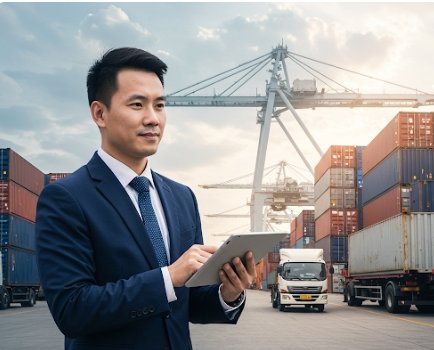
What are the key aspects of the core logic behind reducing last-mile costs with “overseas warehouse pre-positioning” for cross-border e-commerce shipping?
In this article, Weefreight will provide a detailed analysis, which we hope will be helpful.
Shortening delivery distances: Overseas warehouse pre-positioning refers to sellers shipping goods in bulk to warehouses in overseas target markets via sea freight or other means for pre-storage. When a customer places an order, the goods can be shipped directly from the overseas warehouse closest to the customer, significantly shortening the delivery distance. Compared to traditional direct domestic delivery, this reduces the long international transportation distances and thus lowers last-mile delivery costs.
Leveraging local delivery networks: Overseas warehouses have established local delivery networks and long-term partnerships with local express delivery companies such as UPS and FedEx. These local express delivery companies are familiar with the local geography and traffic regulations, enabling more efficient delivery. Furthermore, due to the large scale of these partnerships, overseas warehouses can receive more favorable last-mile freight discounts, thus reducing delivery costs.
Achieving economies of scale: Overseas warehouses accept bulk shipments and can consolidate multiple orders for final delivery. This maximizes the space available on transport vehicles, increases loading rates, and reduces delivery costs per unit, achieving economies of scale. For example, delivering multiple orders from adjacent regions at once is significantly less expensive than delivering each order individually.
Reducing intermediaries: Traditional cross-border logistics models may require multiple intermediaries, such as domestic freight forwarders and international logistics companies, each of which incurs costs. With the overseas warehouse forwarding model, goods are shipped directly from the overseas warehouse to the customer, eliminating these intermediaries and avoiding additional costs, thereby reducing final-mile costs.
Optimizing inventory management: Overseas warehouses can use intelligent systems to monitor inventory and sales data in real time, accurately predicting restocking times and quantities based on sales performance, and achieving refined inventory management. This prevents inventory overstocks and out-of-stock situations, improves inventory turnover, reduces capital costs, and indirectly helps reduce final-mile costs. Effective inventory management ensures timely shipment, avoiding urgent restocking due to out-of-stock situations or customer order cancellations, thereby reducing unnecessary final-haul logistics costs.
Reduced Return and Exchange Costs: Overseas warehouses can serve as reverse logistics hubs, handling returns and exchanges locally. If a customer needs to return or exchange an item, the goods can be returned directly to the overseas warehouse without having to return to China, significantly reducing logistics costs. Furthermore, overseas warehouses can re-inspect and relabel returned goods for resale, minimizing lost goods and ultimately lowering final-haul costs.
If you have any international logistics service needs, please contact us by clicking the floating chat icon in the lower right corner or using the other contact information in the lower right corner of the page!