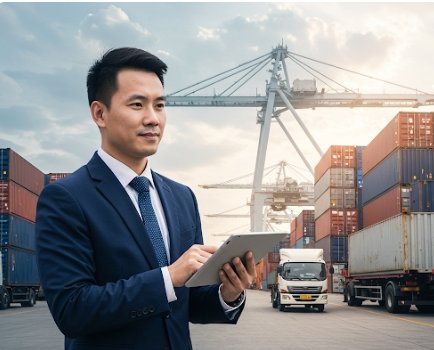
In the entire cross-border logistics chain, “first leg, second leg, and last leg” are core concepts based on the geographical scope and transportation stages of goods flow. These three are closely linked and together determine the timeliness, cost, and stability of cross-border orders.
In this article, Weefreight will break down the definitions, core scenarios, and key points of each stage one by one.
- First Leg Logistics: From the “Origin to the Transit Station” of Cross-Border Transport
- Core Definition
First leg logistics refers to the entire process of transporting goods from a warehouse at the point of shipment (usually the country of origin/export, such as China) to a “core transit station” in the target market (such as an overseas warehouse, platform warehouse, or port/airport in the destination country). It is the “initial link” of cross-border logistics, responsible for transporting bulk goods from domestic to overseas “distribution nodes” and does not directly reach end consumers.
- Common Transportation Methods
The choice of first-leg logistics depends primarily on the weight of the cargo, timeliness requirements, and cost budget. Common methods include:
International express delivery: Services such as DHL, FedEx, and UPS offer fast delivery times (3-7 days) and strong customs clearance capabilities, but are extremely costly. They are primarily suitable for high-value, urgent, and small-volume shipments.
Dedicated logistics: These services integrate resources from “domestic consolidation – international transportation – customs clearance in the destination country” to form fixed routes (such as China-US air delivery and China-Europe rail delivery). They offer moderate delivery times (10-15 days for air delivery and 25-40 days for sea delivery) and are lower in cost than international express delivery. They are the mainstream choice for cross-border e-commerce sellers.
International ocean/air/rail transport: Traditional methods for transporting large shipments. Ocean freight offers the lowest cost but the longest delivery time (30-60 days). Air freight offers similar delivery times but lower costs. Rail transport is suitable for land-connected regions such as China and Europe. All three options require the seller to handle customs clearance and subsequent transshipment in the destination country.
- Key Cores
Customs Clearance Compliance: The core challenge of first-leg logistics is customs clearance in the destination country. It is crucial to ensure that customs declaration documents (commercial invoices, packing lists, certificates of origin, etc.) are authentic and accurate, and comply with the destination country’s commodity access standards (such as FDA and CE certification). Failure to do so can lead to customs detention, fines, or even destruction of goods, directly impacting subsequent processes.
Channel Stability: First-leg transportation is significantly impacted by international events, port congestion, and flight/shipping delays. It is crucial to select a logistics provider with stable capacity and a comprehensive compensation mechanism to avoid stockouts that impact overseas warehouse restocking or platform warehouse warehousing.
Cost and Timeliness Balancing: First-leg costs account for 40%-60% of total cross-border logistics costs. Channel selection should be based on the speed of product turnover. Fast-moving consumer goods are suitable for air delivery to shorten restocking cycles, while large, low-priced goods are suitable for sea freight to control costs.
Second-leg Logistics: The Connecting Link from “Transit Station to Forward Warehouse”
- Core Definition
Second-leg logistics is the short-distance or domestic transportation of goods from a “core transit station” (such as a port, airport, or domestic consolidation warehouse) in the destination country to a “forward storage node” (such as an overseas warehouse, a platform FBA warehouse, or a regional distribution center). It serves as the “intermediary bridge” connecting “cross-border long-distance transportation” with “last-mile delivery” and occurs only within the destination country.
- Typical Application Scenarios
Second-leg logistics scenarios are directly linked to the destination of the first leg, and are commonly used in:
After first-leg shipping to the destination country’s port, goods are then transported by truck to a nearby overseas warehouse;
After first-leg air freight to the destination country’s airport, goods are then transferred to the FBA warehouse by courier or dedicated vehicle;
After arriving at the destination country’s central warehouse, goods are distributed to forward overseas warehouses in different regions.
- Key Cores
Warehouse Timeliness: For platform sellers (such as Amazon FBA sellers), the timeliness of second-leg transportation directly impacts the speed of stock replenishment and on-shelf delivery. FBA warehouses have strict inbound delivery appointment requirements. If second-leg delays cause missed appointments, customers may face queues or even be refused delivery, impacting inventory turnover.
Short-haul Cost Control: Second-leg transportation often involves short-distance land transportation (trucks and vans). While seemingly low per-trip costs, the cumulative cost is higher when replenishing in bulk. It’s best to prioritize integrated logistics providers that offer both first-leg and second-leg services to reduce short-haul costs through economies of scale.
Cargo Safety and Handover: Second-leg transportation often involves bulky shipments. Ensure that the logistics provider has professional loading and unloading capabilities. During handover, verify the quantity and packaging integrity of the goods in person to avoid disputes with the warehouse owner due to damage or missing goods.
- Last-Mile Logistics: Terminal Delivery in the “Last Mile”
- Core Definition
Final-Mile Logistics refers to the “last mile” of goods transported from “forward warehousing nodes” (overseas warehouses, FBA warehouses) to the end consumer. This is the logistics scenario that consumers directly interact with and directly impacts the shopping experience.
- Main Delivery Models
Final-mile logistics models are closely related to warehousing methods. Common types include:
Platform Warehouse Delivery: For example, Amazon FBA warehouses are connected to local logistics providers (UPS and USPS in the United States, DPD in Europe). This offers fast delivery times (1-3 days), supports door-to-door delivery and self-collection locker pickup, and benefits from the platform’s “Prime Member Time Efficiency” benefits.
Overseas Warehouse Self-Delivery: Overseas warehouses connect with local express delivery or dedicated delivery providers. Customers can choose between “standard delivery” (3-7 days) or “expedited delivery” based on their needs. Some overseas warehouses also support “drop shipping,” offering high flexibility.
Direct Mail Last-Mile Delivery: If the “first-mile direct mail” model (without a forward warehouse) is adopted, the last-mile delivery is handled by the destination country’s local postal or courier service (e.g., China Post’s surface mail parcels are delivered by the USPS in the US). This results in slower delivery times but wider coverage.
- Key Cores
Timeliness and Service Experience: Last-mile delivery is of primary concern to consumers. Issues such as delayed delivery, package loss, and incorrect delivery addresses directly lead to negative reviews or even returns. It’s important to choose a local last-mile delivery service provider with extensive coverage and stable delivery times (e.g., FedEx Ground in the US and Europe, or Royal Mail in the UK).
Final-Mile Problem Handling: Last-mile delivery is prone to issues such as “no one to sign for the package,” “unclear address,” and “damaged packages.” Logistics providers must possess efficient exception handling capabilities (e.g., proactively contacting consumers to reschedule delivery and providing damage compensation). For sellers who ship their own parcels, it’s important to clarify the exception handling process with the last-mile delivery service provider in advance to avoid passively responding to customer complaints.
Convenience of Returns and Exchanges: The core difficulty of cross-border returns and exchanges lies in the final mile. If the final mile doesn’t support door-to-door pickup or the return and exchange costs are prohibitively high, it will significantly reduce consumer repurchase. High-quality final mile services require collaboration with warehousing providers, supporting a closed-loop process whereby the consumer initiates a return, the final mile service provider picks up the item at the customer’s door, and delivers it back to the overseas warehouse.
Summary: The Core Logic of Three-Mile Collaboration
The first, second, and last mile are not independent stages, but rather form a complete chain: domestic collection – overseas transit – final delivery. The first mile determines whether goods can successfully enter the destination country, the second mile determines whether goods can be promptly connected to the forward warehouse, and the final mile determines whether consumers are satisfied with their delivery.
For cross-border sellers, the key to ensuring coordinated delivery across all three stages of the shipping process lies in prioritizing fully integrated logistics providers to avoid the fragmented responsibilities that arise from “first-leg delivery with Supplier A, second-leg delivery with Supplier B, and final-leg delivery with Supplier C.” Furthermore, sellers can dynamically optimize shipping methods for each stage based on their product selection characteristics (such as weight and value), operating model (Fulfillment by Amazon/Fulfillment by Merchant), and market region, striking a balance between cost, timeliness, and service experience.
If you have any international logistics service needs, please contact us by clicking the floating chat icon in the lower right corner or using other contact information in the lower right corner of the page.