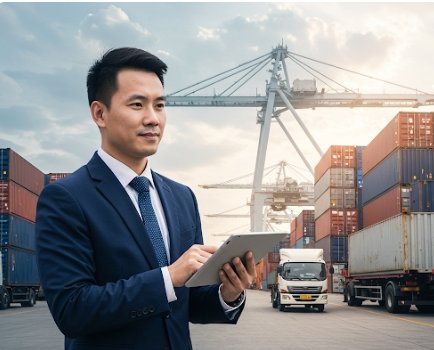
In international shipping, “bonded transport” refers to a special transportation method approved by customs for the transport of bonded goods that have not yet completed customs clearance formalities (e.g., unpaid duties and VAT) from one customs-supervised area/location to another. Its core characteristic is that “the goods remain under customs supervision, but taxes and fees are temporarily exempted.” Essentially, it extends customs supervision to ensure the safe flow of bonded goods between different regulatory nodes, preventing businesses from tying up funds due to “premature tax payments” or losing their bonded status due to “unsupervised transportation.”
I. The Core Logic of Bonded Transport: “Extended Supervision + Tax and Fee Suspension”
To understand bonded transport, we must first clarify the nature of “bonded goods.” These goods (such as imported bonded raw materials, bonded processed products, and re-export goods) remain “customs-supervised goods” because they have not yet completed customs clearance. They must comply with the requirement that they cannot be disposed of (sold, used, or modified) without customs permission.
The core function of bonded transportation is to address regulatory issues during transportation without changing the bonded nature of the goods through the following methods:
Extended Supervision: Customs will register and supervise transportation vehicles (such as container trucks, ocean vessels), transportation routes, and cargo transfer points (such as requiring the use of customs-registered vehicles, installing GPS tracking, and designating departure and destination points), ensuring that goods remain under control throughout the entire process and preventing loss or illegal disposal.
Tax and Fee Deferral: Since goods have not yet completed final customs clearance (e.g., whether they will be sold domestically or re-exported has not yet been determined), companies do not need to pay customs duties, value-added tax, and other taxes and fees in advance during transportation. They only need to pay taxes when the goods have finally completed customs formalities (such as paying taxes for domestic sales or verifying re-export), significantly reducing financial pressure on companies.
II. Applicable Scenarios for Bonded Transportation
Bonded transportation is not a universal transportation method. It is only applicable in specific situations where goods remain bonded and need to be transferred across regulatory zones. Common scenarios can be divided into the following four categories:
- Upstream and Downstream Flow within the Bonded Processing Industry Chain
This applies to the entire process from importing bonded raw materials to exporting processed finished products. Typical scenarios include:
Inter-factory transfer of bonded raw materials: For example, Company A (located in the Shanghai Waigaoqiao Bonded Area) imports bonded plastic pellets from abroad and needs to transport them to Company B (located in the Suzhou Industrial Park Comprehensive Bonded Area) for processing into plastic components. In this case, bonded transportation is necessary to ensure the raw materials remain bonded at all times and avoid losing bonded status due to cross-regional transportation.
Bonded finished goods transit export: For example, Company C (located in the Qianhai Bonded Port Area in Shenzhen) transports bonded processed electronic equipment via bonded sea freight to the Dongjiang Bonded Port Area in Tianjin. It then re-exports it overseas from Tianjin Port. It does not need to pay taxes in advance in Shenzhen; customs formalities are only completed during export verification in Tianjin.
- “Transit Transportation” in Entrepot/Transit Trade
In entrepot trade, goods do not enter the domestic market of the importing country but are merely transited through a bonded area before being exported. This requires bonded transportation to achieve “tax-free circulation”:
Example: A trading company imports rubber from Southeast Asia and initially ships it to the Qingdao Bonded Port Area for temporary storage, with the plan to re-export it to Europe three months later. If the rubber needs to be transported from the Qingdao Bonded Port Area to the Dalian Bonded Port Area (another transit port) for shipment and export, bonded transportation is required to avoid being required to pay additional customs duties in Qingdao or Dalian for “unregulated transportation.”
In transit trade, if goods need to enter China from a port and exit the country via domestic bonded transportation to another port (e.g., entering from Guangzhou Port and exiting to South Korea via bonded transportation to Shanghai Port), they must also follow the bonded transportation process and comply with the “full-process supervision of transit goods” requirement.
- “Transfer Transportation” for Bonded Warehousing and Distribution
This applies to the transfer of bonded goods between different bonded warehousing locations and is commonly used in scenarios such as cross-border e-commerce and bonded display.
Inter-bonded warehouse transfer: For example, cross-border e-commerce company D transports imported cosmetics stored in a Hangzhou bonded warehouse to a Zhengzhou bonded warehouse for distribution (to consumers in North China). Since the goods have not yet been sold to individuals (“cross-border e-commerce retail import” customs clearance has not yet been completed), bonded transportation is required to ensure that the goods remain under customs supervision at all times and avoid violations.
Bonded Exhibit Transportation: For example, a luxury goods company transports bonded exhibits stored in the Xiamen Free Trade Zone to the Shanghai International Import Expo venue (a temporary supervision site approved by customs) for exhibition. After the exhibition, the exhibits must be returned to the Xiamen Free Trade Zone. The entire process must follow bonded transportation procedures to prevent the exhibits from entering the domestic market without permission.
- “Intra-Zone Transfer” within Special Supervision Zones
Bonded goods transportation between companies within China’s “special customs supervision zones” (such as bonded areas, comprehensive bonded areas, and bonded areas of pilot free trade zones) is also subject to bonded transportation management:
For example, Company E (a bonded manufacturer) located in the Guangzhou Nansha Comprehensive Bonded Zone needs to transport bonded auto parts it produces to Company F (a bonded assembly company) in the same zone for assembly. Although they are within the same supervision zone, because the goods remain bonded, they must go through intra-zone bonded transportation procedures and be subject to customs supervision (e.g., transportation based on a “Bonded Zone Goods Transfer Order”).
III. Key Requirements for Bonded Transportation (Avoiding Violations)
Bonded transportation must strictly comply with customs regulations. Failure to comply may result in the goods losing their bonded status, requiring the payment of back taxes and fees, or even penalties. Core requirements include:
Advance Registration and Approval: Submit a “Bonded Goods Transportation Application Form” to the customs at the port of departure, specifying the cargo name, quantity, transportation vehicle information, and origin/destination (which must be within a customs-controlled area/location). Transportation may only proceed after customs approval.
Use of Regulated Transport Vehicles: Transport vehicles/vessels must be registered with customs (e.g., “Customs-Controlled Vehicles” must display customs signs and be equipped with GPS). Unregistered transport vehicles are not permitted to carry bonded goods.
Transportation within a Designated Route and Time Limit: Transport must follow the route approved by customs and may not be altered without authorization. Some customs offices require that transportation be completed within a specified time limit (e.g., 24 hours). Exceeding the time limit requires an explanation to customs.
Complete Documentation and Handover: During transportation, documents such as the Bonded Goods Transport Note and Packing List must be carried. “Confirmation of Goods” and “Receipt Verification” procedures must be completed at the customs/supervisory facilities at both the departure and destination points to ensure that the goods match the actual shipment.
No Unauthorized Disposal of Goods: Unpacking, modification, or replacement of goods during transportation is prohibited. Also, goods may not be shipped to non-designated supervised locations (e.g., shipping bonded goods to a regular warehouse). Doing so will constitute a violation.
In summary, the core value of bonded transportation is “enabling the cross-regional flow of bonded goods under customs supervision, helping companies reduce capital tied up and optimize their supply chain.” However, strict compliance with customs regulations regarding “supervision, documentation, and flow” is required to ensure compliance.
If you have any international logistics service needs, please contact us by clicking the floating chat icon in the lower right corner or using the other contact information in the lower right corner of the page.